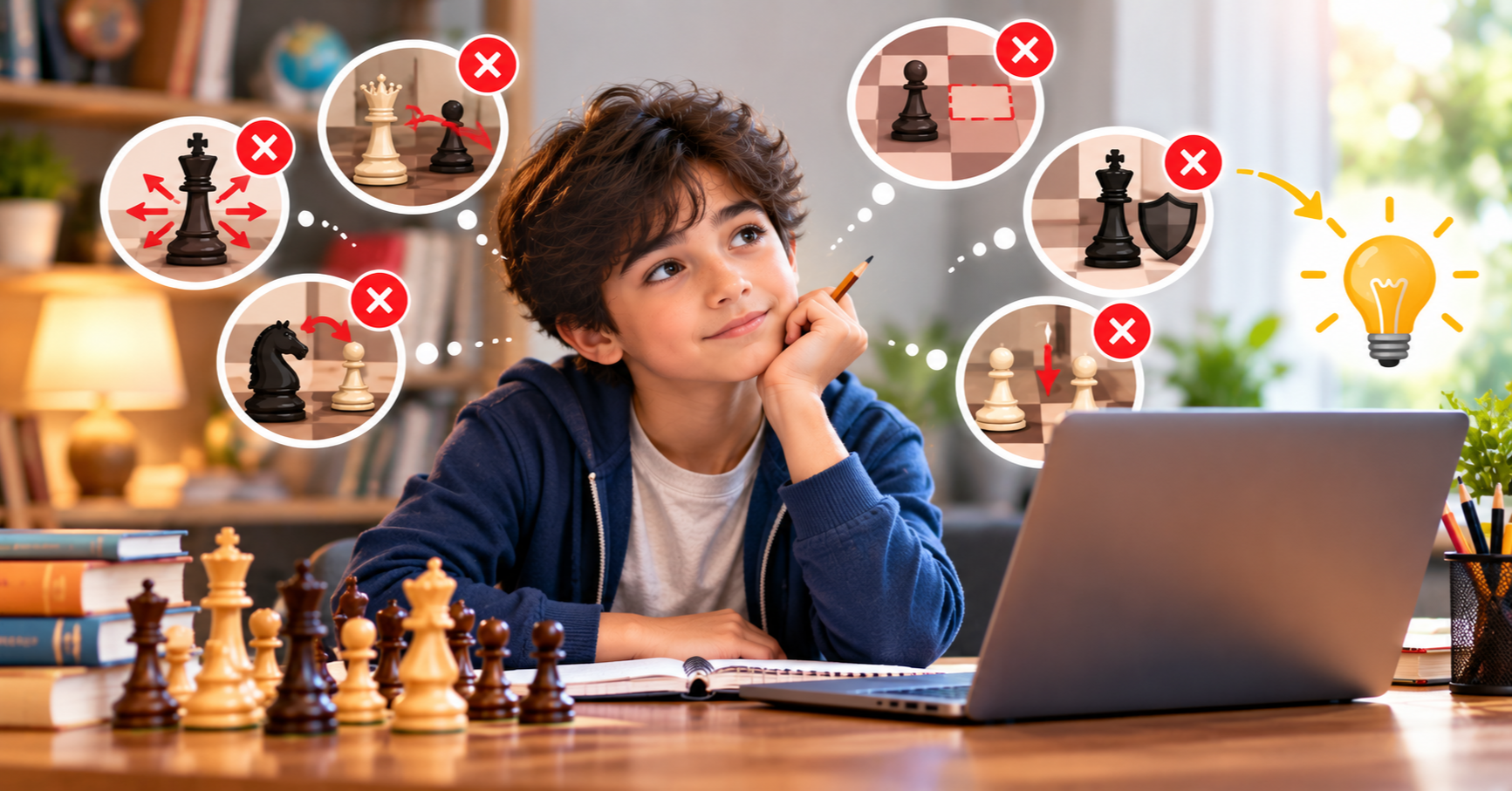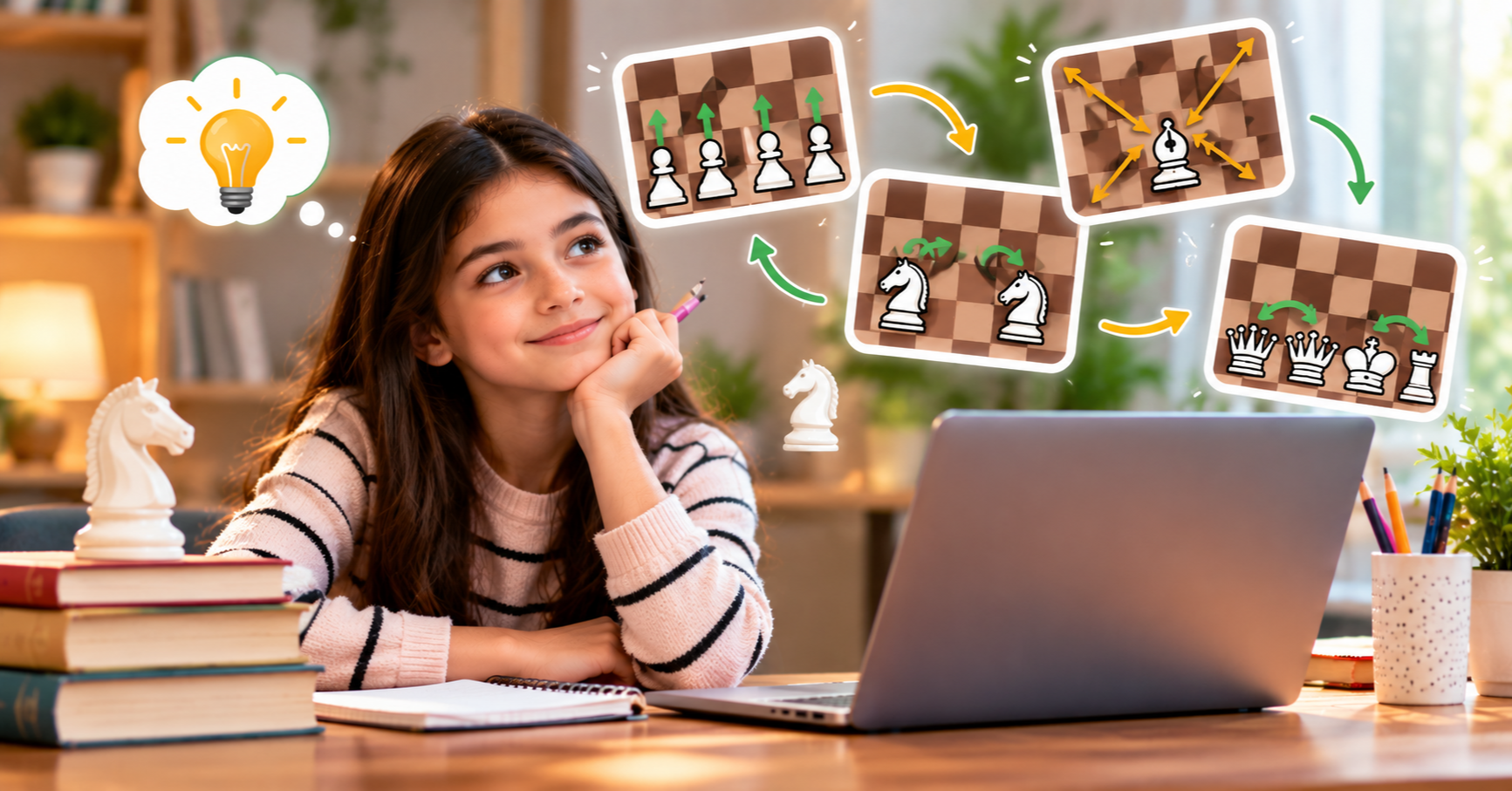

When you first look at a chess board, every piece can seem equally important. The trick is to stop trying to see everything at once. Read the position in layers: find the kings, check immediate threats, notice undefended pieces, and only then choose a plan.
This simple routine works whether you are studying a physical board or playing online chess.
The vertical columns are files, labeled a through h from White's left to right. The horizontal rows are ranks, numbered 1 through 8 from White's side. A square is named by its file and rank, such as e4. These coordinates help you describe a move and recognize the central squares without relying on a screenshot or a gesture.
The board is oriented with a light square at each player's right-hand corner. If the orientation changes on a digital display because you are playing Black, the square names stay the same; the view rotates, not the notation.
Before planning an attack, ask whether either king is in check. A checked player must get out of check immediately. If there is no check, look for exposed lines toward the king: an open file for a rook, a diagonal for a bishop, or a queen and knight working together.
You do not need to calculate a checkmate every turn. Simply noticing that your king has fewer defenders than your opponent has attackers can change what you should do next.
A loose piece is one that is undefended or easy to attack. Scan your opponent's pieces, then your own. Are two pieces threatened by one move? Could a capture remove a defender? When you play chess, these questions often reveal straightforward opportunities and prevent losses that have nothing to do with deep strategy.
You should also check what changes when a piece moves. A bishop may be protecting a rook along a diagonal. A pawn may be guarding the square where your knight wants to jump. Moves alter relationships across the whole position.
If you are unsure where to start, consider forcing moves first. A check demands a response. A capture changes the balance of pieces. A threat asks the opponent to address something on the next turn. You still have to judge whether a forcing move is sound; not every check improves your position.
For each promising move, imagine one sensible reply from your opponent. Then ask what the board would look like afterward. Even a two-move conversation can save you from a blunder.
Before selecting a move in your next chess game, try this order:
- Is my king in check, or is a piece threatened?
- What changed after the opponent's last move?
- Do I have a safe check, capture, or useful threat?
- What is the opponent's strongest reply?
The checklist is short enough to use during a casual game. Over time, the scan becomes quicker and the chess board starts to feel less crowded. Open chess on Entertainment Couch and practice the routine for one full game. The aim is to notice more before you move, not to find a perfect move every time.