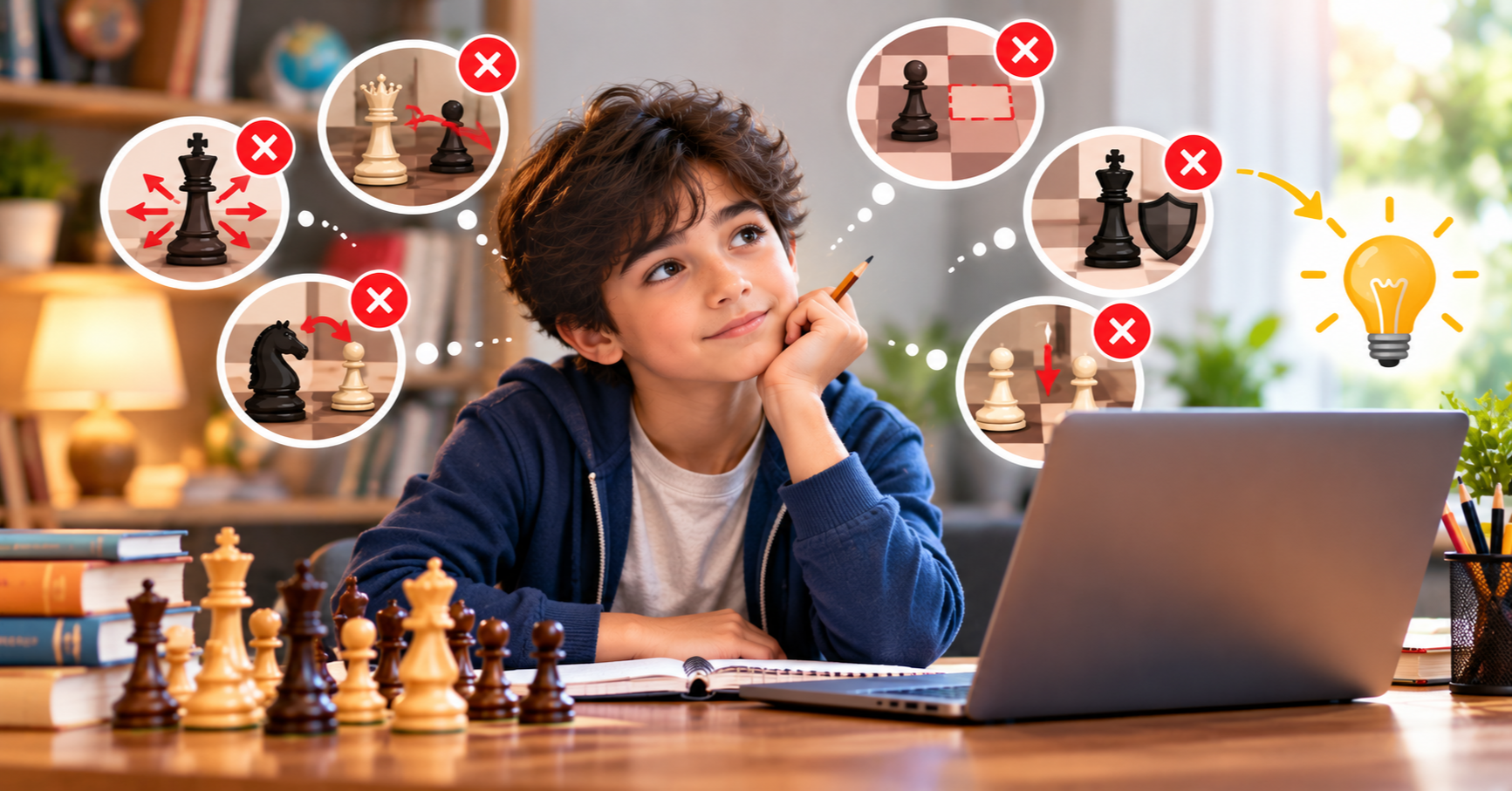
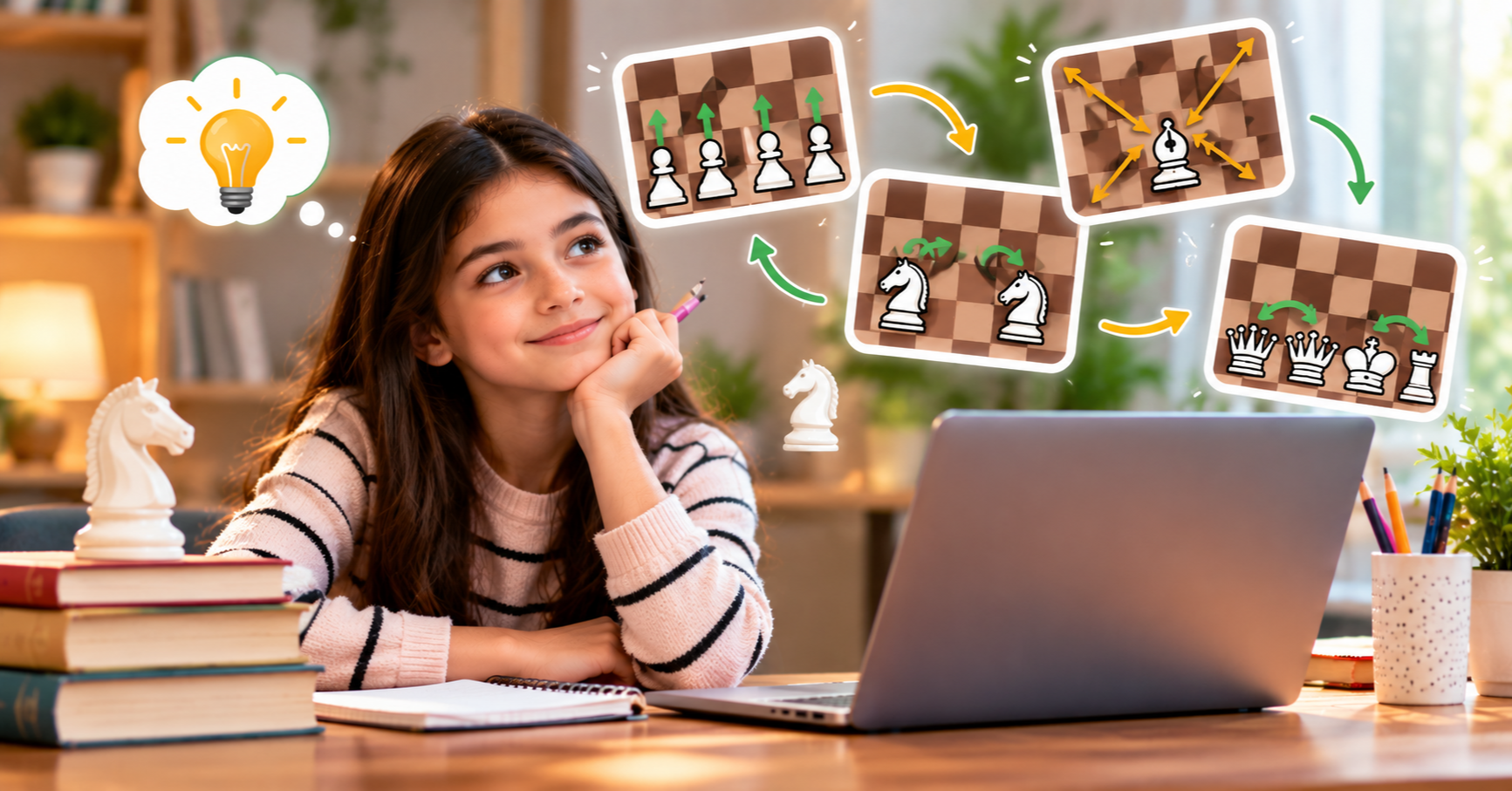
You can learn plenty from a lost game, especially when you know what went wrong. In free chess online, beginners often repeat a few avoidable mistakes: they rush a move, overlook a threat, or start an attack before their pieces are ready. Fixing even one of these habits can make your next game more enjoyable.
Here are seven things to watch for when you play chess.
Before you move, check where your piece will land. Can an opposing pawn or piece capture it? A move that looks active may simply give away material. Also scan the piece you are moving away from: perhaps it was defending something important. A ten-second safety check is often more useful than a complicated plan.
A tempting move is not automatically a good one. Imagine your opponent's most forcing reply: a check, a capture, or a direct threat. If that reply ruins your idea, rethink the move. This habit turns a series of guesses into a conversation with the position on the chess board.
The queen is powerful, which makes early attacks attractive. But an exposed queen can be chased by your opponent's developing pieces. You may spend several turns moving it while your knights and bishops remain at home. Develop your pieces, look after your king, and bring the queen into an attack when there is a clear reason.
An attack is exciting, but it does not help if your own king is about to be checkmated. Castling, when legal and sensible, can move the king away from the center and connect your rooks. Keep an eye on open lines and threats around your king even after you castle; no king position is automatically safe.
Pawns are useful for controlling space, but they cannot move backward. Every pawn advance can leave squares behind it less protected. In many chess games, a few thoughtful pawn moves support your pieces better than moving a different pawn on every turn. Ask what each pawn move gains and what it gives up.
Being ahead in material is not the same as having won. Slow down when you think you are close. Check whether your opponent has a forcing move, and keep your pieces coordinated. If you are trying to deliver checkmate, be alert for stalemate: leaving an opponent with no legal move while their king is not in check produces a draw.
You do not need a long analysis session. After an online chess game, identify the first move where you lost a piece, missed a threat, or felt unsure. Then choose one adjustment for your next game. A simple lesson such as check for captures before every move is more actionable than play better.
Try another round of free chess on Entertainment Couch and focus on just one of these habits. Improvement is often less about learning a clever trick and more about noticing the move you almost made on autopilot.